Yoga Flow
8 poses

Yoga for Ankylosing Spondylitis

Keep the spine moving, upright and breathing freely

The NHS and the National Axial Spondyloarthritis Society (NASS) call regular exercise essential in ankylosing spondylitis (AS), to keep posture, spinal movement and lung capacity. Randomised trials of yoga in AS have reported gains in spinal mobility and everyday function. This sequence focuses on posture, backward bending, gentle rotation, chest expansion and lying face down, and avoids heavy forward bends.
Practise safely

  • If your spine is partly fused or you have osteoporosis, avoid forceful twists and deep forward bends; ask a physiotherapist to tailor this.
  • Keep the neck neutral. Do not tip the head back or put weight on it.
  • During a flare, keep moving gently but shorten the holds and go less far.
  • A stiff spine fractures more easily. Get urgent help for new neck or back pain after a fall.

The sequence

Wall Posture Check

1. Wall Posture Check

Tadasana · 2 × 30s
Trains upright posture to counter a forward stoop.
  1. Stand with heels, buttocks and shoulder blades against a wall.
  2. Draw the chin gently back so the head moves towards the wall, without tipping it up.
  3. Grow tall through the crown of the head.
  4. Breathe into the sides of the ribs.
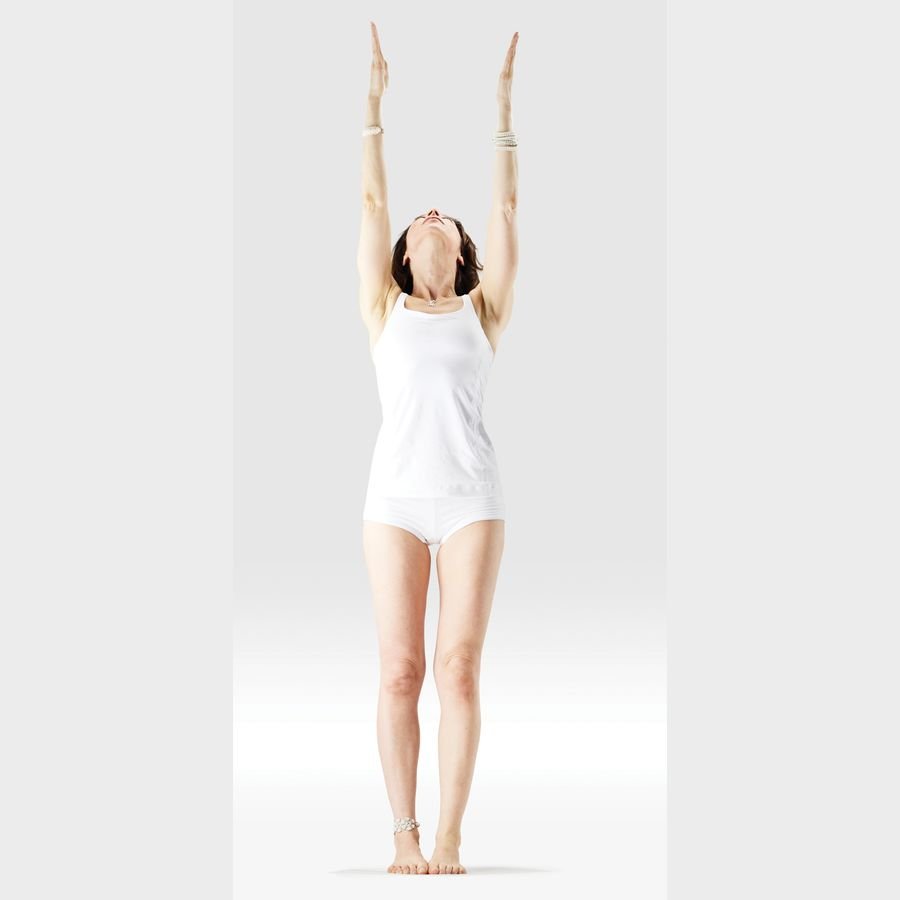
Upward Salute

2. Upward Salute

Urdhva Hastasana · 3 × 15s
Opens the chest and encourages the spine to extend.
  1. Stand tall, feet hip-width apart.
  2. Inhale and sweep the arms overhead.
  3. Lift the breastbone gently, keeping the gaze forward.
  4. Exhale and lower the arms.
⚠ Keep the head in line with the spine; do not let it drop back.
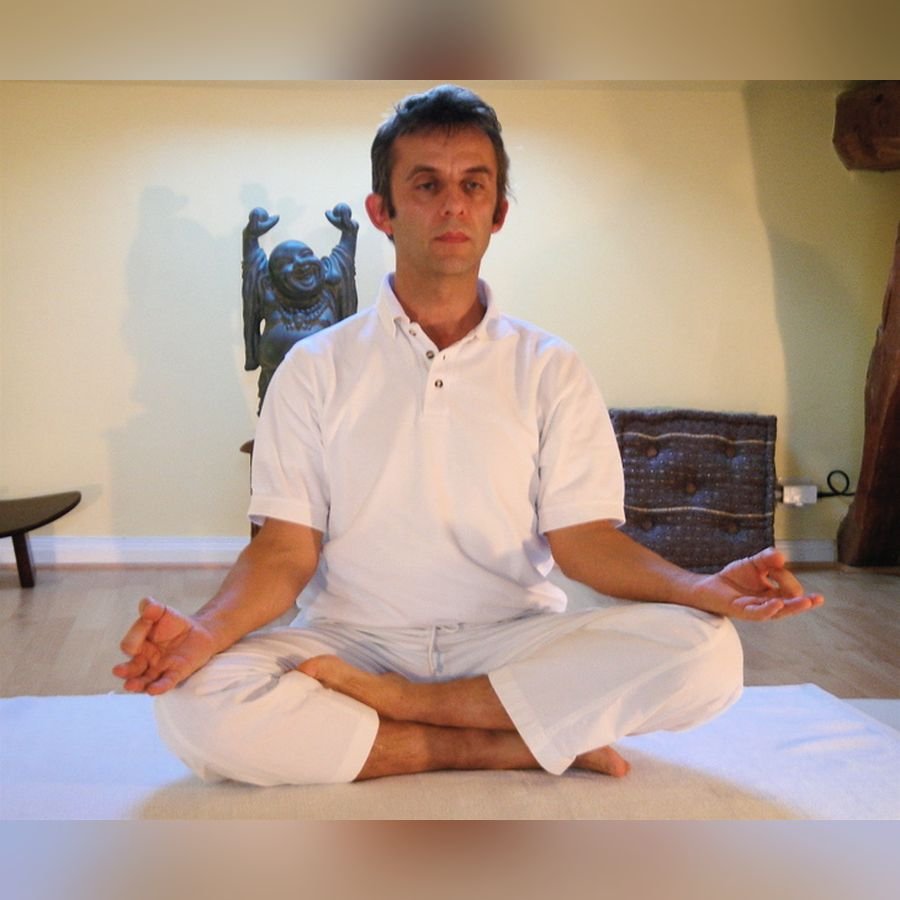
Rib Expansion Breathing

3. Rib Expansion Breathing

Sukhasana · 1 × 90s
Maintains chest expansion and lung capacity, which AS can restrict.
  1. Sit tall on a chair or cushion.
  2. Rest your hands on the sides of the lower ribs.
  3. Inhale slowly, widening the ribs into your hands.
  4. Exhale fully, then repeat slowly.
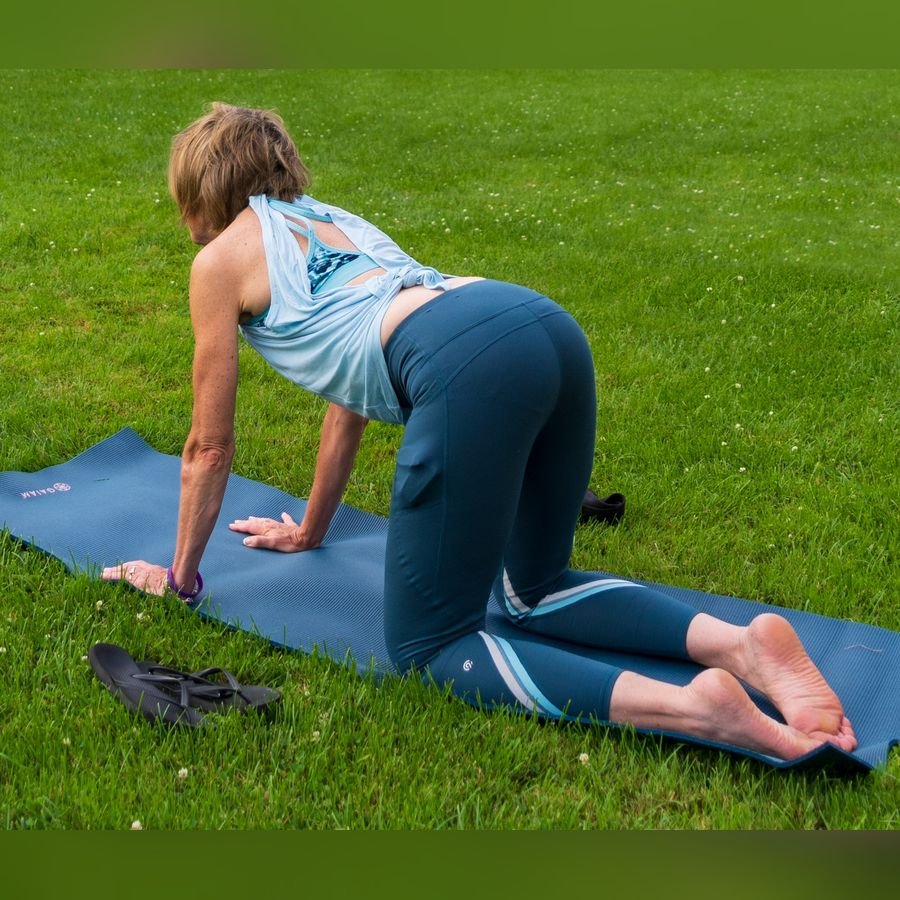
Cat–Cow

4. Cat–Cow

Marjaryasana–Bitilasana · 2 × 40s
Moves each part of the spine through bending and arching.
  1. Come onto hands and knees, wrists under shoulders.
  2. Inhale: drop the belly, lift the chest and tailbone (Cow).
  3. Exhale: round the back and tuck the chin (Cat).
  4. Move slowly and evenly through the whole spine.
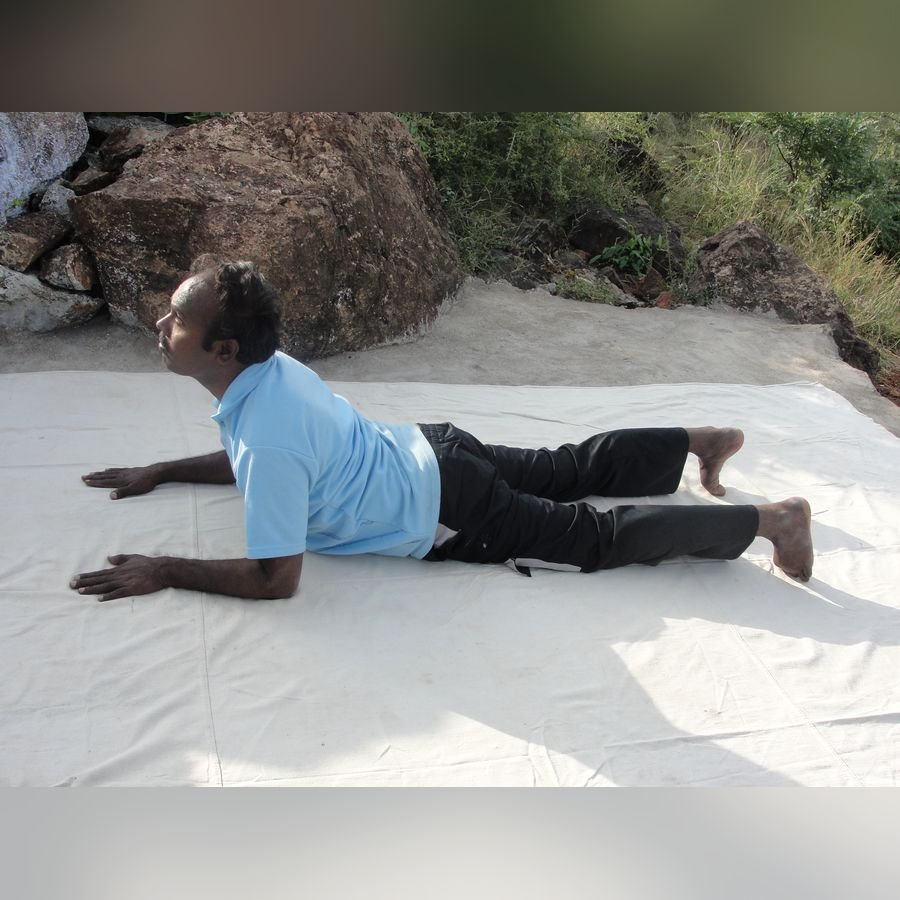
Sphinx

5. Sphinx

Salamba Bhujangasana · 2 × 30s
Gentle backward bending to counter stiffness and stooping.
  1. Lie on your belly, elbows under shoulders.
  2. Press the forearms down and lift the chest gently.
  3. Keep the neck long and the gaze forward.
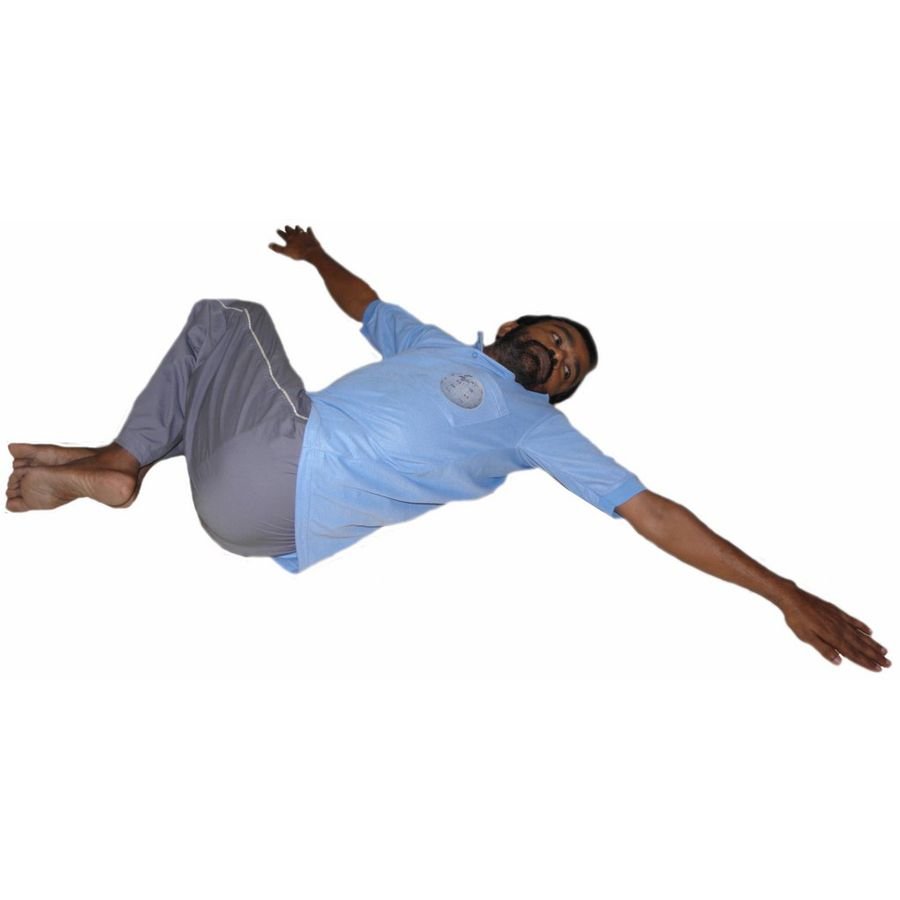
Supine Twist

6. Supine Twist

Jathara Parivartanasana · 2 × 30s
Maintains rotation in the spine and ribcage.
  1. Lie on your back, knees bent, arms out to the sides.
  2. Lower both knees slowly to one side, only as far as is comfortable.
  3. Keep both shoulders on the floor.
  4. Return to centre and switch sides for the next set.
⚠ Keep the movement small if your spine is fused.
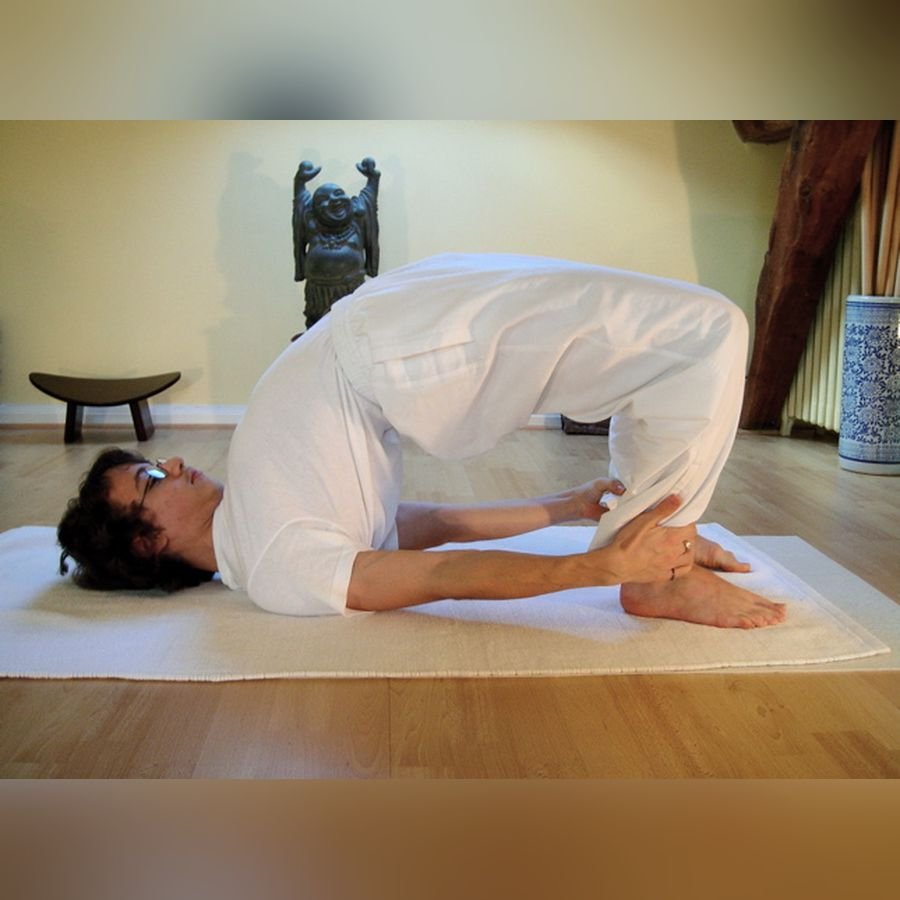
Bridge

7. Bridge

Setu Bandhasana · 3 × 15s
Strengthens the buttocks and back muscles and opens the front of the hips.
  1. Lie on your back, knees bent, feet hip-width apart.
  2. Press into the feet and lift the hips.
  3. Squeeze the buttocks and feel the front of the hips open.
  4. Lower down one vertebra at a time.
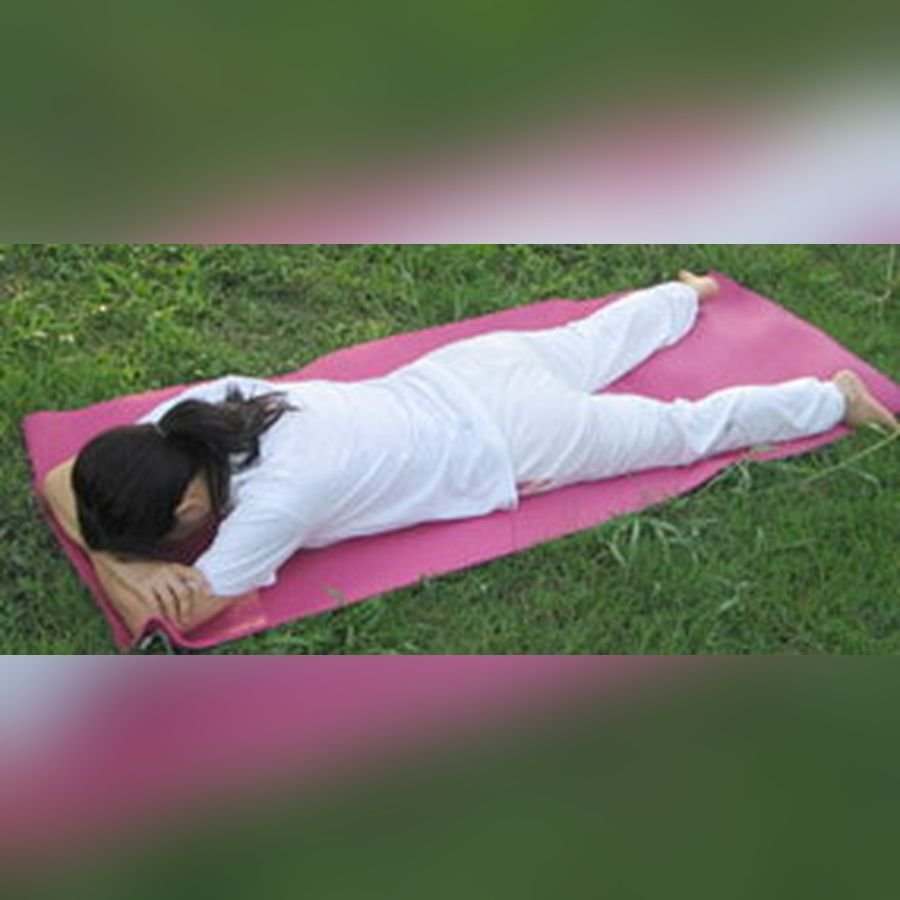
Crocodile Pose

8. Crocodile Pose

Makarasana · 1 × 180s
Lying face down stretches the front of the hips and helps keep the spine and hips straight.
  1. Lie face down with the forehead on stacked hands or a cushion.
  2. Let the legs relax, toes turned out.
  3. Breathe into the belly and lower back.
  4. Let the hips sink towards the floor.

Home care & lifestyle

✦

Exercise every day

NASS calls exercise the single most important thing you can do. Combine daily stretching with swimming, walking or cycling.

✦

Use warmth

A warm shower or bath eases morning stiffness. Hydrotherapy in a warm pool makes exercise easier.

✦

Sleep on a firm mattress

A supportive mattress and a thin pillow help keep the spine straight overnight.

✦

Mind your posture

Use a supportive chair, keep screens at eye level and avoid slumping for long periods.

✦

Breathe deeply

Daily deep breathing keeps the ribcage moving and protects lung capacity.

Try to avoid

  • Sitting or lying still for long periods
  • Smoking, which is linked to worse AS and poorer lung function
  • Contact sports or activities with a high risk of falls

See a doctor if

  • Back pain and stiffness that is worse in the morning and eases with movement
  • Your usual treatment is no longer controlling a flare
  • New pain or swelling in other joints, or unusual tiredness

Get urgent help if

  • A red, painful eye or sensitivity to light (iritis): get seen the same day
  • New neck or back pain after a fall or minor injury

Sources

From the blog

Articles on Ankylosing Spondylitis

All →