In a Johns Hopkins randomised trial, 8 weeks of modified yoga improved pain, energy, mood and physical function in sedentary adults with rheumatoid arthritis or knee osteoarthritis. A 2025 trial in JAMA Network Open found yoga eased knee osteoarthritis pain about as well as strengthening exercise. Following Johns Hopkins guidance, this sequence uses simple standing and lying poses, small backbends and support for balance.
Practise safely
- If it hurts, stop. Soreness can show up the next day, so start gently and build up over several sessions.
- During a flare (hot, swollen joints), rest that joint and keep other movement gentle.
- With hip arthritis, avoid deep hip openers and turning the hips far outwards.
- With rheumatoid arthritis in the neck, never put weight on the neck or bend it far; check with your rheumatologist first.
- Use a chair or wall for balance, and pad the knees if kneeling hurts.
The sequence
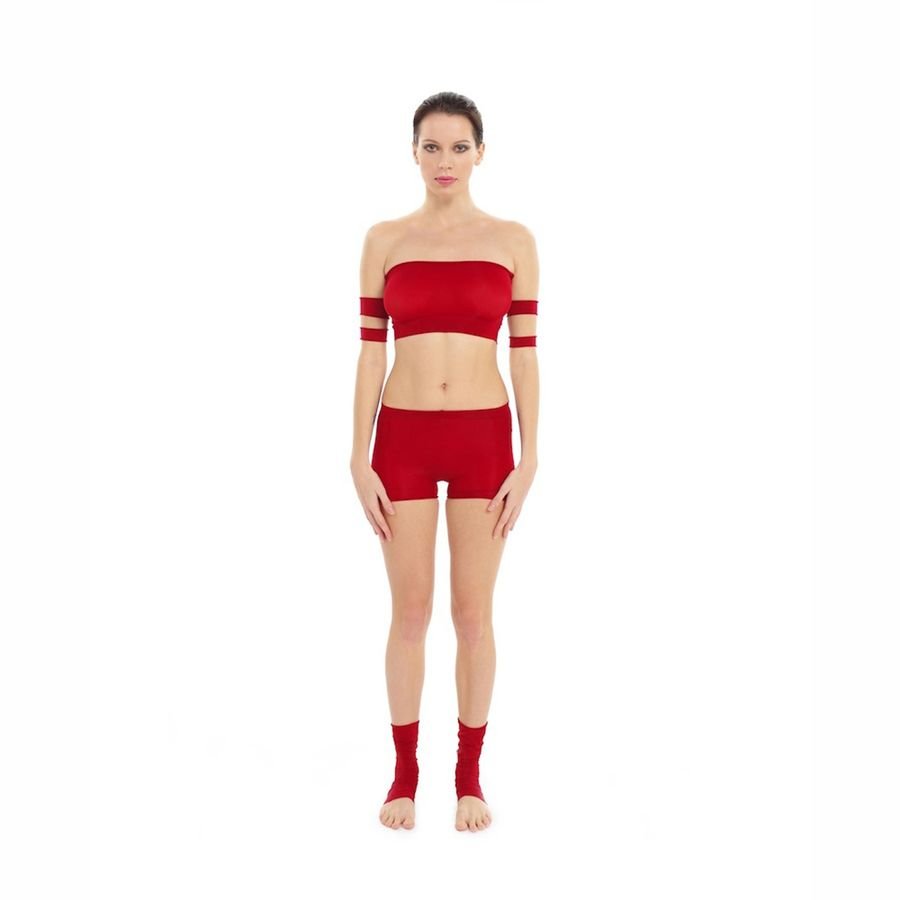
1. Mountain Pose
Tadasana · 1 × 40s
Builds posture and body awareness, the base of every standing pose.
- Stand with feet hip-width apart, weight even across both feet.
- Soften the knees so they are not locked.
- Lengthen up through the crown of the head; relax the shoulders.
- Breathe slowly and notice your posture.
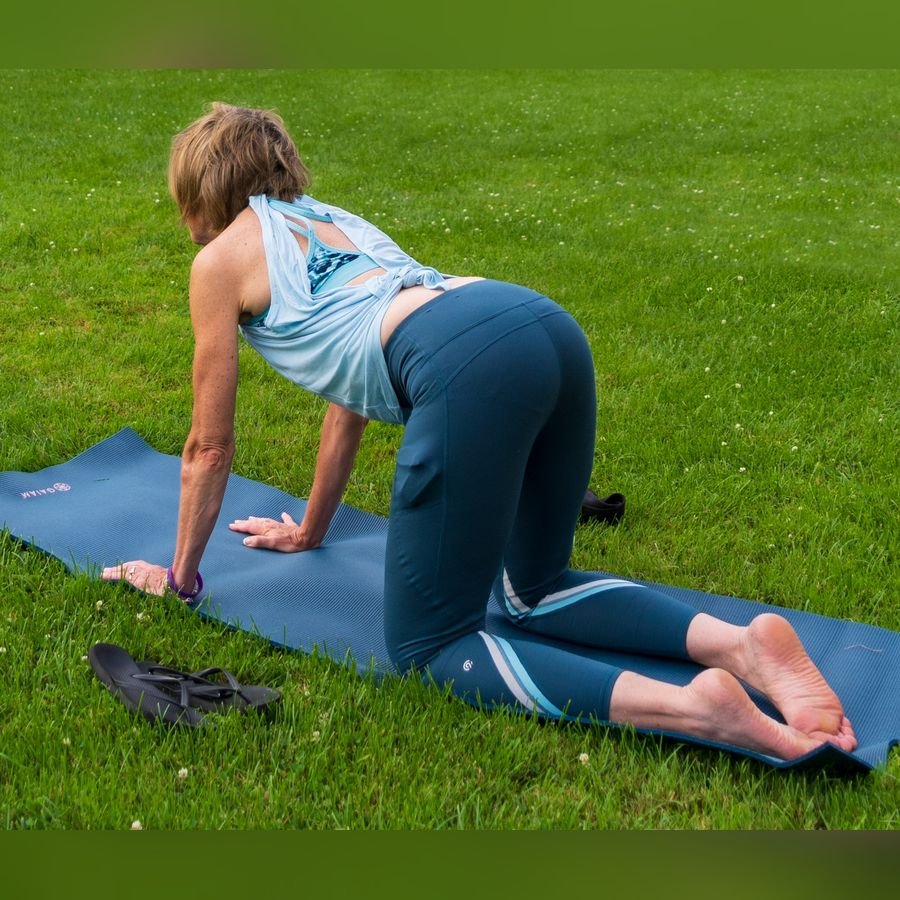
2. Cat–Cow
Marjaryasana–Bitilasana · 2 × 40s
Mobilises the spine and gently loads the wrists and knees.
- Come onto hands and knees with a folded blanket under the knees.
- If your wrists hurt, make soft fists or lower onto the forearms.
- Inhale: gently lift the chest and tailbone (Cow).
- Exhale: round the back and tuck the chin (Cat).
⚠ If kneeling is painful, sit on a chair and arch and round the back instead.
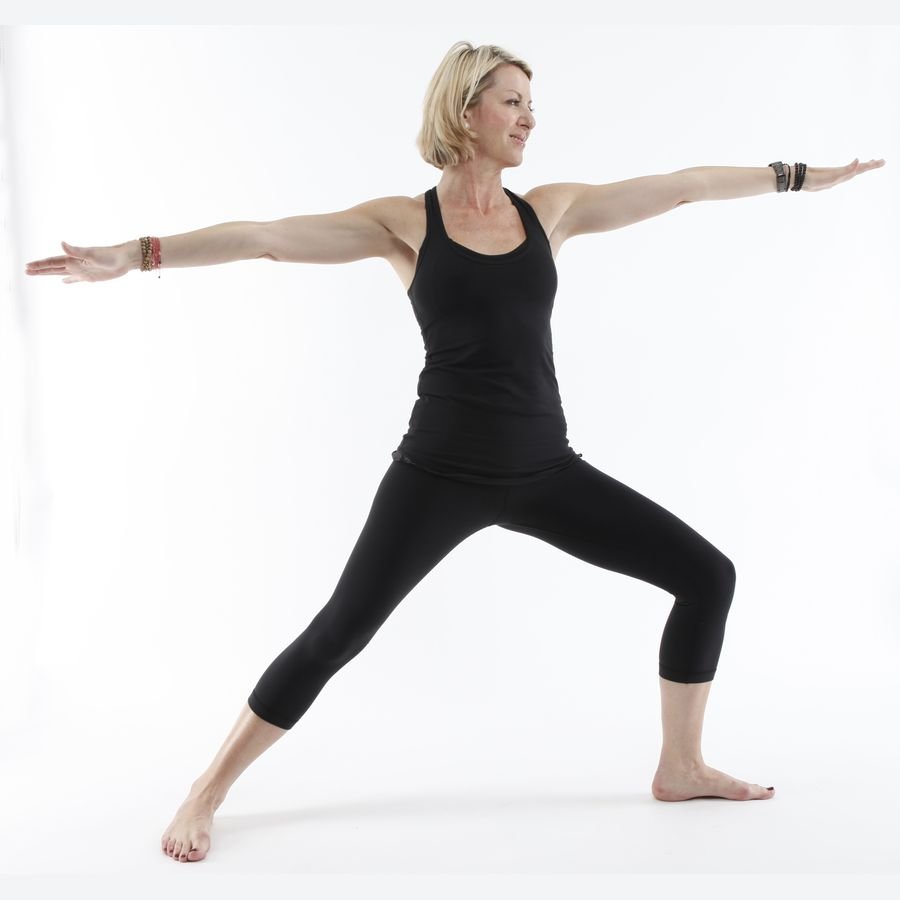
3. Warrior II
Virabhadrasana II · 2 × 20s
Strengthens the legs and hips that support arthritic knees.
- Step the feet wide; turn the right foot out and the left slightly in.
- Bend the right knee only as far as is comfortable, over the ankle.
- Raise the arms to shoulder height and look past the front hand.
- Hold, then switch sides for the next set.
⚠ Keep the front knee bend shallow; rest a hand on a chair if needed.
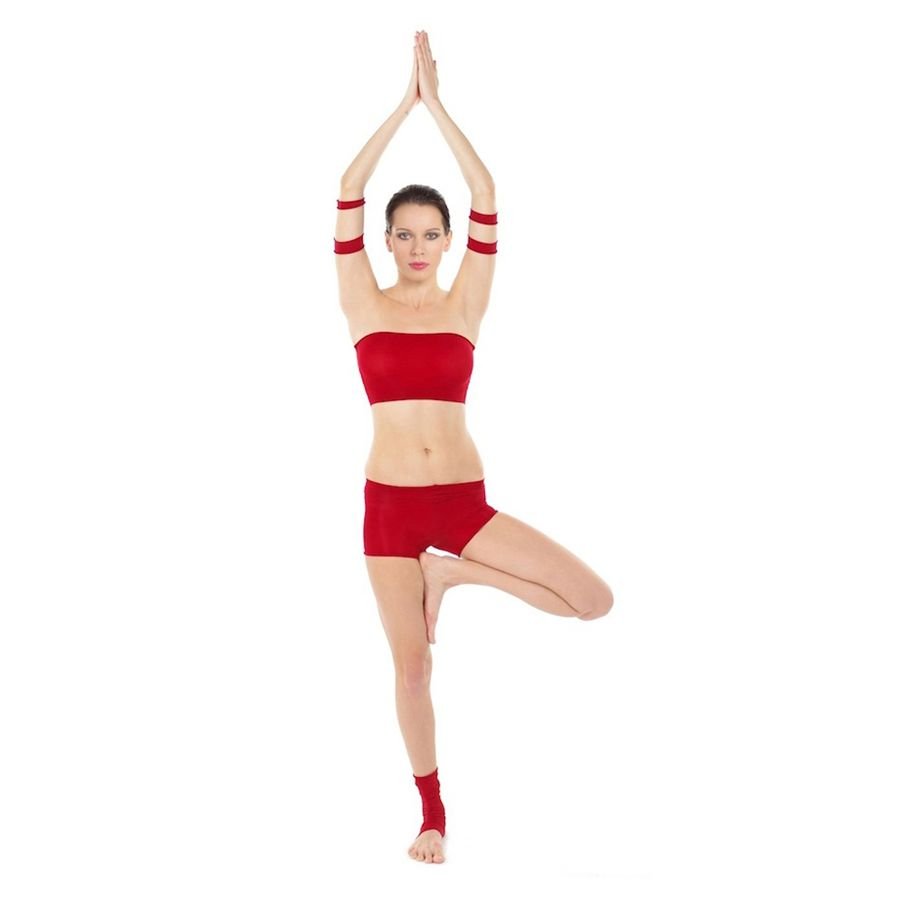
4. Supported Tree Pose
Vrksasana · 2 × 20s
Improves balance, which helps prevent falls.
- Stand beside a wall or chair and rest one hand on it.
- Shift your weight onto the left foot.
- Place the right foot on the left ankle or calf, never on the knee.
- Hold steady, then switch sides for the next set.
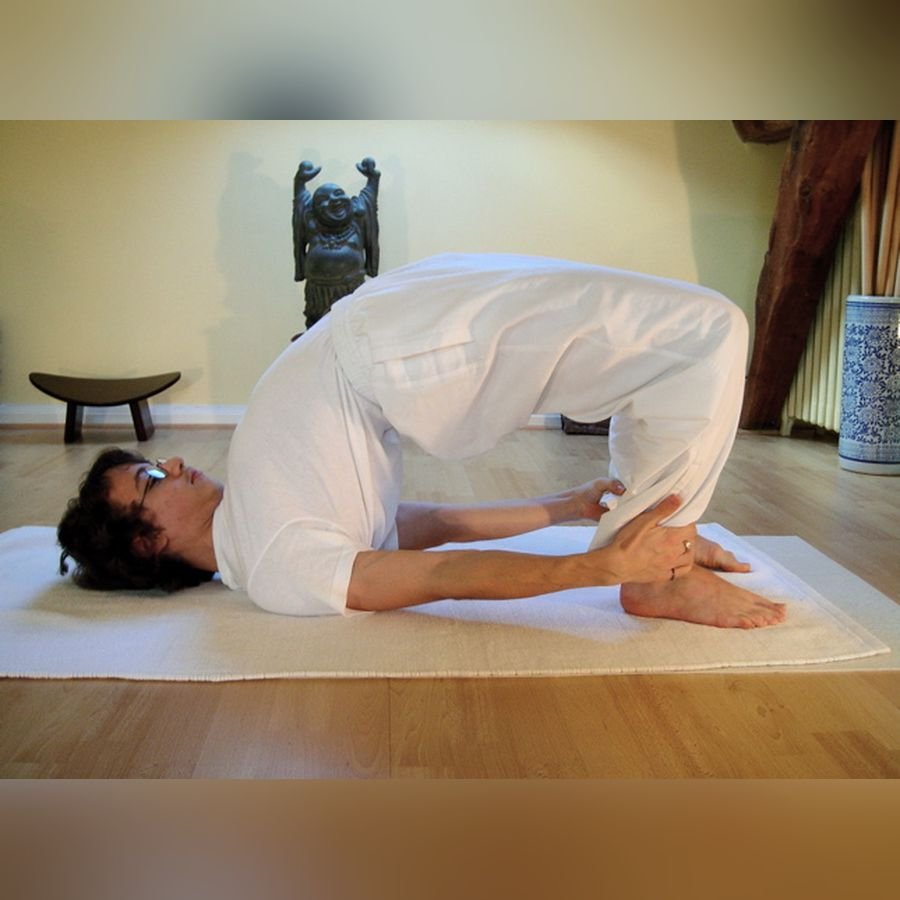
5. Bridge
Setu Bandhasana · 3 × 15s
Strengthens the hips and the back of the thighs, balancing the muscles around the knee.
- Lie on your back, knees bent, feet hip-width apart.
- Press into the feet and lift the hips a little way.
- Keep the knees pointing forward and the neck relaxed.
- Lower down slowly.
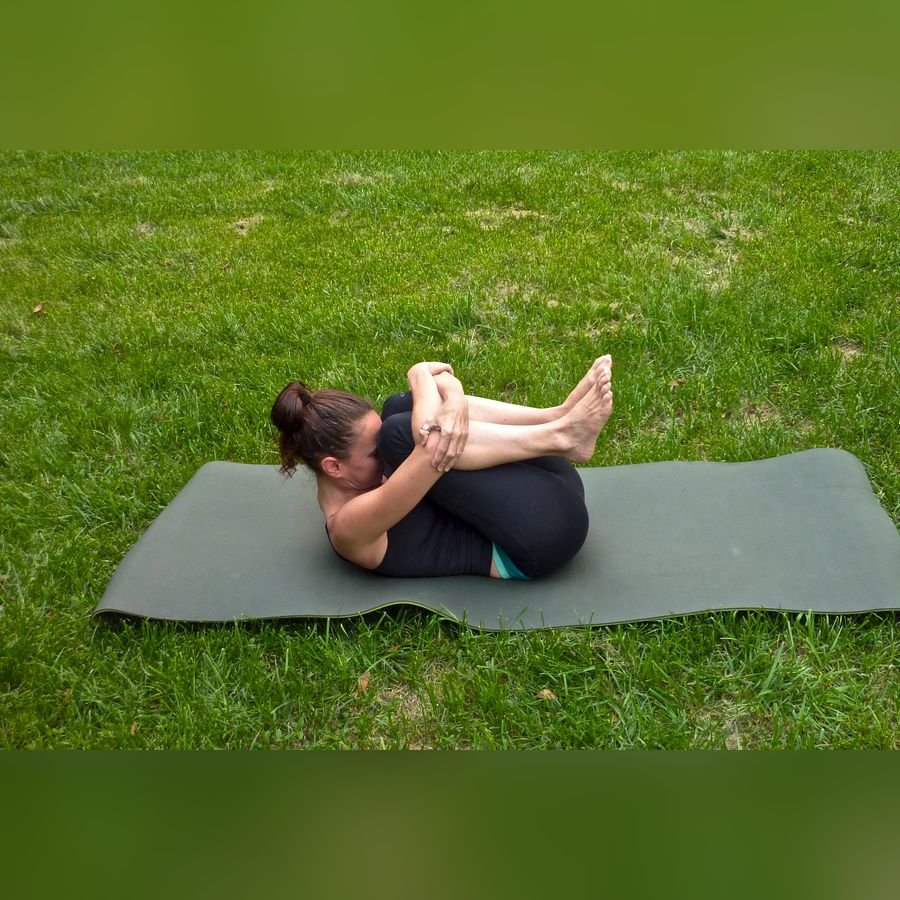
6. Knees to Chest
Apanasana · 2 × 30s
Eases stiffness in the hips and lower back.
- Lie on your back.
- Draw the knees towards the chest, one at a time if that is easier.
- Hold behind the thighs rather than over sore knees.
- Rock gently side to side.
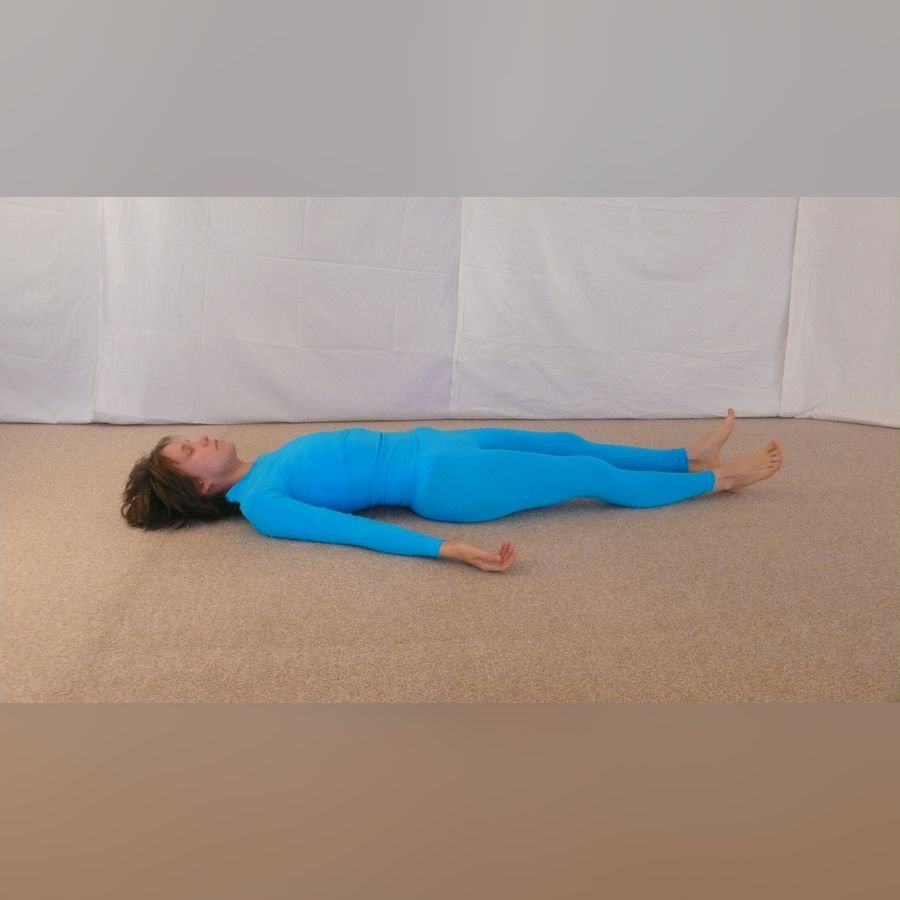
7. Deep Relaxation
Shavasana · 1 × 180s
Relaxation lowers stress, which can ease how pain is felt.
- Lie on your back with a pillow under the knees if you need it.
- Let the arms rest away from the body, palms up.
- Close your eyes and breathe naturally.
- Relax each part of the body in turn, from feet to head.
Home care & lifestyle
✦
Exercise regularly
Strong muscles support and protect your joints. Mix strength, stretching and gentle aerobic activity.
✦
Keep to a healthy weight
Extra weight adds load to the knees, hips and feet.
✦
Warmth for stiffness, cold for swelling
A warm bath or heat pack eases morning stiffness. A wrapped cold pack calms a hot, swollen joint.
✦
Pace yourself
Alternate activity with rest, and split big jobs into smaller ones, especially during flares.
✦
Take medicine as prescribed
Keep taking it even when you feel better, and check with your healthcare team before trying supplements.
Try to avoid
- Long periods without moving
- High-impact activity on painful joints during a flare
- Over-the-counter remedies or supplements that could interfere with your medicine, without checking first
See a doctor if
- Joint pain, swelling or stiffness that lasts more than a few weeks
- Morning stiffness that lasts longer than 30 minutes
- Pain is stopping you sleeping or doing everyday tasks
Get urgent help if
- A joint suddenly becomes hot, red, swollen and very painful, especially with a fever
Sources